With this forum in mind, I’m revisiting a post I wrote a couple of years ago, called: “What we talk about when we talk about climate.”
While the title references Raymond Carver, the article itself follows Mike Hulme, author of Why We Disagree about Climate Change. Hulme writes “Our engagement with climate change and the disagreements that it spawns should always be a form of enlightenment.”
What we talk about when we talk about climate
There was a good discussion of climate ethics recently at Climate Progress. In the post “Ten reasons why examining climate change policy through an ethical lens is a practical imperative,” Donald Brown, head of the Rock Ethics Institute at Penn State University, underscores key points about the role of ethics in addressing climate change.
One is that any debate about climate economics relies on often-unstated ethical assumptions, such as the value of current actions, or costs of inaction, to future generations. Another is that as long as ethical perspectives are missing from the U.S. debate, Americans will be ill-informed on how climate issues are perceived by others around the world.
In the comments section, several responses mention strategic framing: the role that ethics plays in climate communications. Bill McKibben joins the thread to distinguish audiences, pointing out that, especially among young people and people of faith, ethical framing can be a boon to effective communication. In a 2009 paper on framing climate, communications writer Matthew Nisbet agrees. He offers the example of the WE campaign ads as particularly effective in calling Americans to a shared moral challenge.
Indeed, a society’s dearest choices are rife with ethical implications. “Shaping the future energy use in the affluent world is primarily a moral issue,” writes Vaclav Smil in Energy at the Crossroads. “A great deal of serious thinking is needed to navigate the decades immediately ahead,” foresees champion-of-biodiversity Edward O. Wilson in Consilience. “In the course of it all we are learning the fundamental principle that ethics is everything.”
On Donald Brown’s practical question of how ethical reasoning informs the climate debate, this issue of P&P features a range of perspectives, including Dale Jamieson on geoengineering, Steve Vanderheiden on climate cosmopolitanism, and Stephen Gardiner on climate as a moral hazard.
While ethical and other social science/humanities perspectives are increasingly perceived as relevant to the climate discussion, the relevance applies in reverse as well.
Climate conversations have important implications for social and philosophical understanding. I think of these ideas as: What we talk about when we talk about climate.
Here are three sketches.
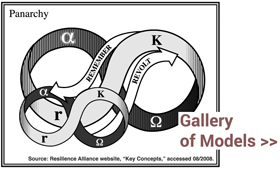
Humans exist within social-ecological systems.
The climate story is one of processes and connections. Critical planetary systems – climate, nitrogen, biodiversity – are impaired by human activities (see Rockström et al.). Both the power of human influence on natural systems and the vulnerability of human dependence on natural systems inspire awe – and, for some, doubt.
Uncertainties are central to social-ecological experience.
Impairments of planetary systems are historical experiments that are run but once. In linked social-ecological systems, knowledge is probabilistic. A very high confidence characterizes the analysis of human impact on the climate system, according to the typologies of uncertainty and confidence developed by the Intergovernmental Panel on Climate Change (see IPCC – pdf). Uncertainty becomes central (see Post-Normal Science). The more the climate is changed, the less confident we can be about how it might further change (see Easterbrook).
Knowledge of facts presupposes knowledge of values.
The very-high-confidence fact of human impact on the climate system is not prescriptive in and of itself. To derive knowledge, to gain a capacity for effective action, depends on competing and complimentary values and perceptions, including: worldviews of nature as benign, tolerant and/or ephemeral (see cultural theory); aspirations of economic growth and/or human development; senses of personal and/or collective identity (see identity tree); and awareness of agency, i.e. that one has free will, that one can be effective, that risks can be recognized and evaluated.
None of these insights are new. Ongoing scientific progress – in biology and physics, systems theory and network theory, cognitive science, and so on – has revealed glimpses of life’s secrets. We learn of relationships that have causal efficacy, of stochastic processes in basic phenomena, and of cognition that is bodily situated.
Yet neither have these insights been apprehended with the kind of immediacy that the climate conversation offers and demands.
What we talk about when we talk about climate is the story of social-ecological relationships, with all their uncertainties and fact-value entanglements.
If effective climate action is to be taken, these may turn out to be the most practical conversations of all.